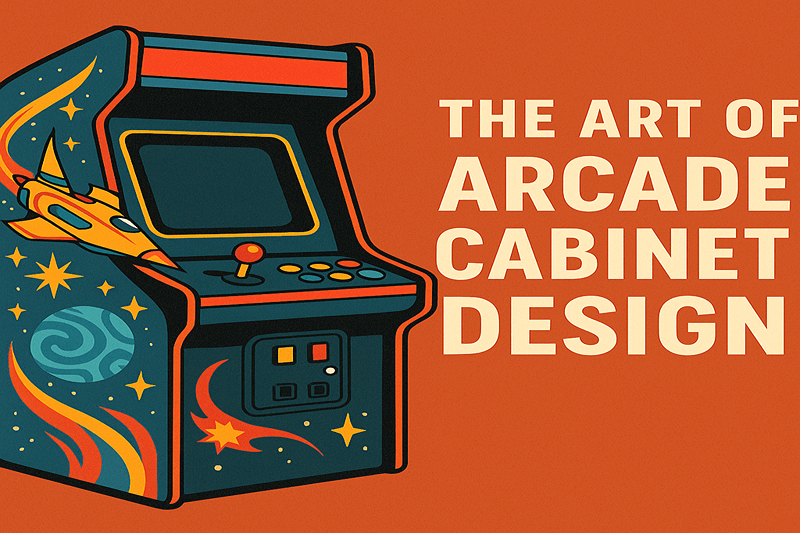
The Art of Arcade Cabinet Design
Arcade cabinet design was more than just functionality - it was art that captured players' imagination before they even dropped a coin.
Visual Impact
Side Art: Bold, colorful graphics that told the game's story at a glance. From Pac-Man's playful maze motifs to Street Fighter's dynamic character portraits.
Marquee Design: The glowing header that beckoned players. Often featuring the game's logo with dramatic lighting effects.
Color Psychology: Bright yellows and blues for family-friendly games, darker themes for mature titles.
Functional Art Elements
Control Panel Layout: Ergonomic button arrangements that felt natural and responsive.
Monitor Bezel: Framed the screen while displaying game-specific artwork and instructions.
Cabinet Shape: Each form factor - upright, cocktail, or mini - served specific gameplay and space needs.
Design Evolution
- Early 1970s: Simple wood grain and basic graphics
- Golden Age (1980s): Explosion of colorful, themed artwork
- Fighting Era (1990s): More sophisticated character art and branding
- Modern: LED integration and digital displays
Iconic Design Elements
T-Molding: The plastic edge trim that became an arcade signature
Coin Door: Chrome fixtures that added industrial authenticity
Speaker Grilles: Functional elements that became design features
The best cabinet designs created an immersive experience that transported players into the game world before they even started playing.