The History of Arcade Games
From simple electronic entertainment to cultural phenomenon, arcade games shaped the entire video game industry.
The Beginning (1970s)
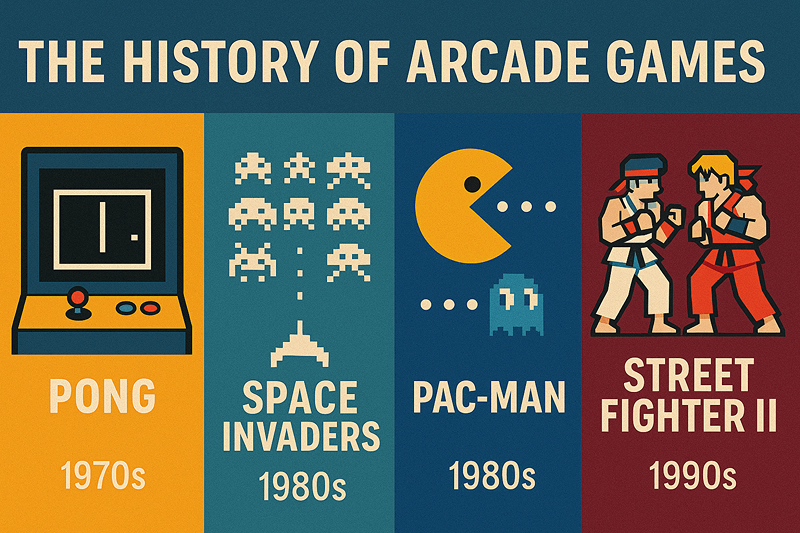
Pong (1972): The first commercially successful arcade game. Simple tennis simulation that proved electronic entertainment had mass appeal.
Breakout (1976): Introduced by Atari, this brick-breaking game refined the arcade formula.
The Golden Age (1980-1985)
Space Invaders (1978): Created the shoot-em-up genre and proved games could be addictive.
Pac-Man (1980): Broadened gaming's appeal beyond teenage boys. First gaming mascot.
Donkey Kong (1981): Introduced Mario and established Nintendo as a major player.
Galaga (1981): Refined the shooter formula with formation-flying enemies.
Innovation Era (1985-1995)
Street Fighter II (1991): Created the fighting game template still used today.
Mortal Kombat (1992): Pushed boundaries with realistic violence, leading to game ratings.
Decline and Evolution (1995-Present)
Home Console Competition: PlayStation and other systems brought arcade-quality games home.
Modern Arcade: Rhythm games, redemption games, and VR experiences keep arcades relevant.
Cultural Impact
Arcade games didn't just entertain - they created:
- Gaming culture and communities
- Competitive gaming (early esports)
- Character icons (Pac-Man, Mario)
- Music and sound design standards
The arcade era laid the foundation for today's $180 billion gaming industry.