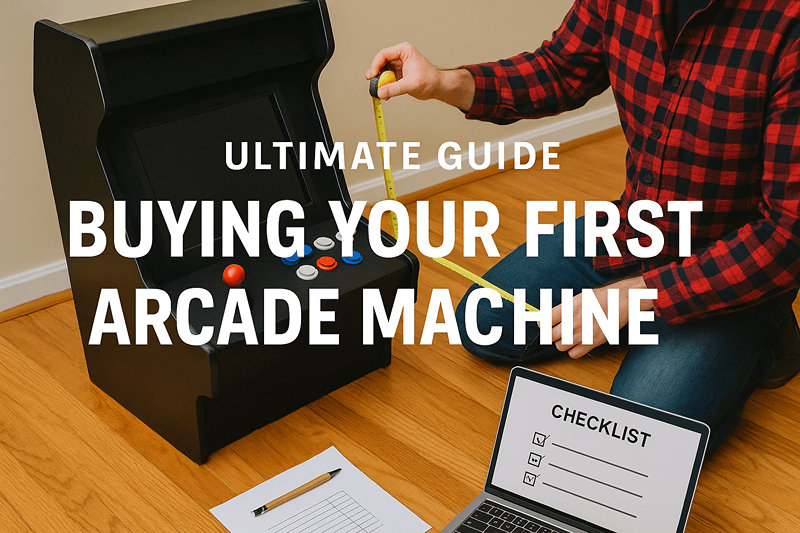
The Ultimate Guide to Buying Your First Arcade Machine
Buying your first arcade machine is an exciting milestone for any gaming enthusiast. Whether you're a nostalgic gamer looking to relive childhood memories or a collector starting your journey, this guide will help you make an informed decision.
Space Planning and Logistics
Physical Requirements
First, consider your space requirements. Most arcade machines are approximately 6 feet tall, 2 feet wide, and 3 feet deep. You'll need additional space around the machine for comfortable play and maintenance access. Measure your intended location carefully and account for door openings and stairs if you need to move the machine.
Key Measurements:
- Standard upright: 72" H × 26" W × 32" D
- Cocktail table: 30" H × 54" W × 28" D
- Mini/bartop: 24" H × 19" W × 16" D
- Play clearance: 4-6 feet in front for comfortable gaming
- Service access: 2-3 feet behind for maintenance
Delivery Considerations
- Weight: Most uprights weigh 250-400 pounds
- Doorway clearance: Measure all entry points
- Stair navigation: Consider professional movers
- Floor protection: Use furniture pads and dollies
- Power requirements: Standard 110V outlet usually sufficient
Budget Planning
Budget is another crucial factor. Vintage arcade machines can range from $1,000 for common titles to $10,000 or more for rare classics. Factor in potential restoration costs, shipping, and ongoing maintenance. Remember that arcade machines are investments that often appreciate in value when properly maintained.
Price Ranges by Category
Common Classics ($1,000-2,500)
- Pac-Man, Ms. Pac-Man
- Galaga, Galaxian
- Centipede, Millipede
- Frogger, Scramble
Popular Favorites ($2,500-5,000)
- Donkey Kong, Donkey Kong Jr.
- Street Fighter II
- Mortal Kombat series
- Neo Geo MVS systems
Rare and Valuable ($5,000-15,000+)
- Original Pong machines
- Early vector games (Asteroids, Tempest)
- Low-production runs
- Prototype or test machines
Additional Costs to Consider
- Shipping: $200-800 depending on distance
- Restoration: $500-3,000 for major work
- Tools and supplies: $200-500 for basic maintenance
- Insurance: Consider adding to homeowner's policy
- Electricity: $20-40 per month for regular use
Game Selection Strategy
Finally, research the specific game you want to purchase. Some machines are easier to maintain than others, and parts availability varies significantly. Popular games like Pac-Man and Donkey Kong have excellent parts support, while obscure titles may require more specialized knowledge and harder-to-find components.
Beginner-Friendly Choices
Pac-Man Family
- Pros: Excellent parts support, simple hardware, nostalgic appeal
- Cons: Very common, moderate investment potential
- Best for: First-time buyers, family gaming
Galaga/Galaxian
- Pros: Reliable hardware, good gameplay, reasonable prices
- Cons: Limited game variety on single board
- Best for: Shoot-em-up fans, reliable gaming
Centipede
- Pros: Unique trackball control, Atari quality, good support
- Cons: Trackball maintenance required
- Best for: Players wanting unique controls
Advanced Collector Options
Neo Geo MVS
- Pros: Multiple games on one system, excellent quality
- Cons: Higher cost, complex system
- Best for: Serious collectors, fighting game fans
Williams/Bally Games
- Pros: Excellent engineering, great gameplay
- Cons: More complex repairs, higher maintenance
- Best for: Experienced owners, pinball crossover
Condition Assessment
What to Look For
Cosmetic Condition
- Cabinet integrity: Check for water damage, cracks, repairs
- Artwork quality: Original vs. reproduction, fading, damage
- T-molding: Missing or damaged edge trim
- Monitor bezel: Cracks or missing pieces
Functional Testing
- Gameplay: All functions work correctly
- Controls: Responsive joysticks and buttons
- Monitor: Clear, bright, proper colors
- Audio: Clean sound from all speakers
- Coin mechanism: Accepts coins and registers credits
Internal Inspection
- Wiring condition: No brittle or damaged wires
- PCB integrity: Clean boards, no obvious damage
- Power supply: Stable voltages, no excessive heat
- Cleanliness: Dust and debris levels
Red Flags to Avoid
- Water damage: Rust, warping, electrical corrosion
- Bootleg hardware: Non-original boards or modifications
- Poor repairs: Amateur wiring, wrong parts
- Missing components: Original boards, marquees, bezels
- Conversion damage: Evidence of game swapping
Where to Buy
Recommended Sources
Arcade Specialty Dealers
- Pros: Expert knowledge, tested machines, warranties
- Cons: Higher prices, limited selection
- Best for: First-time buyers, peace of mind
Online Marketplaces
- Pros: Large selection, competitive prices
- Cons: No testing, shipping risks, variable quality
- Best for: Experienced buyers, project machines
Local Collectors
- Pros: See before buying, often negotiable, local pickup
- Cons: Limited selection, irregular availability
- Best for: Finding specific titles, avoiding shipping
Arcade Auctions
- Pros: Rare finds, competitive pricing
- Cons: Condition unknowns, pickup requirements
- Best for: Experienced collectors, project hunters
Negotiation Tips
- Research market values before making offers
- Point out needed repairs to justify lower prices
- Bundle deals for multiple machines
- Consider timing - demand varies seasonally
- Be prepared to walk away if price isn't right
Maintenance and Support
Essential Tools
- Basic hand tools (screwdrivers, pliers, socket set)
- Multimeter for electrical testing
- Cleaning supplies (contact cleaner, rags, vacuum)
- Spare parts (fuses, microswitches, bulbs)
- Service manuals for your specific game
Parts and Service Network
- Online suppliers: Wide selection, competitive prices
- Local arcade techs: Personal service, hands-on help
- Collector communities: Advice, rare parts, expertise
- Manufacturer support: Limited but valuable when available
Learning Resources
- Online forums: KLOV, Arcade-Museum, Reddit
- YouTube channels: Repair tutorials, restoration guides
- Local clubs: Hands-on learning, networking
- Books and manuals: Technical references, history
Making the Purchase
Pre-Purchase Checklist
- Verify authenticity and originality
- Test all functions thoroughly
- Document condition with photos
- Negotiate final price including delivery
- Arrange payment through secure methods
- Plan logistics for delivery and setup
Payment Protection
- PayPal Goods & Services for online transactions
- Escrow services for high-value purchases
- Cash on delivery for local transactions
- Bank transfers with proper documentation
- Avoid wire transfers to unknown sellers
Final Inspection
- Double-check condition matches description
- Verify serial numbers and authenticity
- Test operation before finalizing payment
- Document any issues for warranty purposes
- Get all accessories and documentation
Post-Purchase Setup
Initial Setup
- Position carefully in designated location
- Level the machine using adjustable legs
- Connect power and test operation
- Adjust controls and settings as needed
- Clean thoroughly inside and out
Break-In Period
- Monitor performance for first few weeks
- Address any issues promptly
- Document settings and configurations
- Establish maintenance routine
- Join communities for ongoing support
Long-Term Ownership
Value Preservation
- Maintain originality when possible
- Keep documentation of all work done
- Store in climate-controlled environment
- Regular maintenance prevents major issues
- Quality repairs maintain value
Upgrade Considerations
- LED lighting for energy efficiency
- Audio improvements for better sound
- Control upgrades for longevity
- Cosmetic restoration for appearance
- Modern conveniences while preserving character
Conclusion
Your first arcade machine purchase should be exciting, not stressful. Take time to research, inspect carefully, and buy from reputable sources. Remember that this is likely the first of many machines - start with something manageable and build your skills and collection over time.
The arcade community is welcoming and helpful. Don't hesitate to ask questions and seek advice. Welcome to the wonderful world of arcade collecting!
The perfect first arcade machine is one that brings you joy every time you play it. Choose with your heart, but verify with your head.